Formlabs
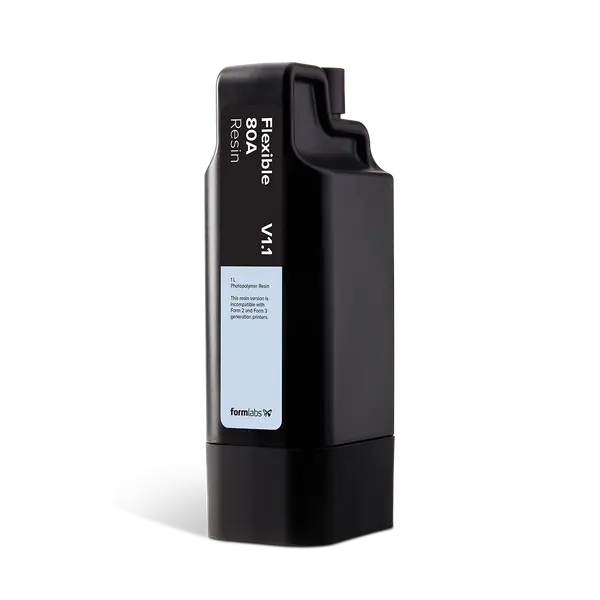
Formlabs Flexible 80A Resin V1.1 1 L
Flexible 80A Resin V1 is a stiff, soft-touch translucent elastomer with an 80A Shore durometer that is ideal for prototyping rubber-like parts with the flexibility of harder rubber or TPU. Parts printed in this material balance softness with strength, allowing them to withstand bending, flexing, and compression through repeated cycles.
Formlabs Resin Generation & Compatibility Notice:
- Flexible 80A Resin V1 is compatible with Form 3 Series printers.
- Flexible 80A Resin V2 is optimized specifically for Form 4 Series printers. Choose V2 for an improved formulation delivering 4x higher rebound, 2x higher tear strength, 2x higher elongation at break, and improved printability, aesthetics, and aging.
- Availability Change: Flexible 80A Resin V1.1 for Form 4 generation printers will no longer be available for direct purchase after Thursday, December 31, 2026, or until stock lasts.
Key Features
- Firm Elastomeric Feel: With a Shore 80A hardness, it provides the "hard-rubber" feel typical of shoe soles, tire treads, and industrial seals.
- Exceptional Tear Strength: Engineered to withstand stretching and pulling, ensuring functional parts like straps and hinges don't fail during stress testing.
- High Optical Clarity: The translucent finish is ideal for inspecting internal geometries or for use in lighting applications where a soft, diffused glow is required.
- Low Compression Set: Maintains its original dimensions even after prolonged periods of being squeezed or compressed, critical for long-term sealing applications.
Ideal Applications
- Industrial Seals & Gaskets: Custom-shaped, vibration-dampening seals for machinery and enclosures.
- Consumer Wearables: Prototyping watch bands, ear tips, and impact-resistant smartphone cases.
- Ergonomic Grips: Soft-touch handles and button overlays for power tools and medical devices.
- Medical Simulation: Creating firm, realistic anatomical models that mimic the feel of dense cartilage.
- Robotics: Flexible soft-robotic actuators and high-friction grippers for automated assembly lines.
FAQ
How Does this Differ from Flexible 50A (formerly Elastic 50A)?
Flexible 80A is much firmer, similar to a tire tread or a hard rubber mallet. Flexible 50A is significantly softer and more stretchy, similar to a silicone wristband or a rubber band.
Can I use Flexible 80A for Skin-Contact Applications?
While Flexible 80A is safe for handling, it is not certified for long-term skin contact. For medical-grade wearables, we recommend using BioMed Flex 80A.
Do I Need a Special Build Platform for the Form 4?
We highly recommend using the Build Platform 2 for the Form 4. Because flexible parts can be difficult to remove with a scraper, the Flex-Release technology allows you to "pop" the parts off without the risk of tearing the material.
What should I do if I currently use V1.1 on a Form 4 printer?
Because Flexible 80A Resin V1.1 for Form 4 printers will be retired after December 31, 2026, we recommend transitioning your workflow to Flexible 80A Resin V2 to take advantage of the upgraded formulation. Alternatively, you can evaluate Flexible 50A Resin (formerly Elastic 50A) or BioMed Flex 80A Resin depending on your part requirements.

Features
Technical Specifications
Choose options

Flexible 80A Resin V1 is a stiff, soft-touch translucent elastomer with an 80A Shore durometer that is ideal for prototyping rubber-like parts with the flexibility of harder rubber or TPU. Parts printed in this material balance softness with strength, allowing them to withstand bending, flexing, and compression through repeated cycles.
Formlabs Resin Generation & Compatibility Notice:
- Flexible 80A Resin V1 is compatible with Form 3 Series printers.
- Flexible 80A Resin V2 is optimized specifically for Form 4 Series printers. Choose V2 for an improved formulation delivering 4x higher rebound, 2x higher tear strength, 2x higher elongation at break, and improved printability, aesthetics, and aging.
- Availability Change: Flexible 80A Resin V1.1 for Form 4 generation printers will no longer be available for direct purchase after Thursday, December 31, 2026, or until stock lasts.
Key Features
- Firm Elastomeric Feel: With a Shore 80A hardness, it provides the "hard-rubber" feel typical of shoe soles, tire treads, and industrial seals.
- Exceptional Tear Strength: Engineered to withstand stretching and pulling, ensuring functional parts like straps and hinges don't fail during stress testing.
- High Optical Clarity: The translucent finish is ideal for inspecting internal geometries or for use in lighting applications where a soft, diffused glow is required.
- Low Compression Set: Maintains its original dimensions even after prolonged periods of being squeezed or compressed, critical for long-term sealing applications.
Ideal Applications
- Industrial Seals & Gaskets: Custom-shaped, vibration-dampening seals for machinery and enclosures.
- Consumer Wearables: Prototyping watch bands, ear tips, and impact-resistant smartphone cases.
- Ergonomic Grips: Soft-touch handles and button overlays for power tools and medical devices.
- Medical Simulation: Creating firm, realistic anatomical models that mimic the feel of dense cartilage.
- Robotics: Flexible soft-robotic actuators and high-friction grippers for automated assembly lines.
FAQ
How Does this Differ from Flexible 50A (formerly Elastic 50A)?
Flexible 80A is much firmer, similar to a tire tread or a hard rubber mallet. Flexible 50A is significantly softer and more stretchy, similar to a silicone wristband or a rubber band.
Can I use Flexible 80A for Skin-Contact Applications?
While Flexible 80A is safe for handling, it is not certified for long-term skin contact. For medical-grade wearables, we recommend using BioMed Flex 80A.
Do I Need a Special Build Platform for the Form 4?
We highly recommend using the Build Platform 2 for the Form 4. Because flexible parts can be difficult to remove with a scraper, the Flex-Release technology allows you to "pop" the parts off without the risk of tearing the material.
What should I do if I currently use V1.1 on a Form 4 printer?
Because Flexible 80A Resin V1.1 for Form 4 printers will be retired after December 31, 2026, we recommend transitioning your workflow to Flexible 80A Resin V2 to take advantage of the upgraded formulation. Alternatively, you can evaluate Flexible 50A Resin (formerly Elastic 50A) or BioMed Flex 80A Resin depending on your part requirements.
Features
Technical Specifications

Flexible 80A Resin V1 is a stiff, soft-touch translucent elastomer with an 80A Shore durometer that is ideal for prototyping rubber-like parts with the flexibility of harder rubber or TPU. Parts printed in this material balance softness with strength, allowing them to withstand bending, flexing, and compression through repeated cycles.
Formlabs Resin Generation & Compatibility Notice:
- Flexible 80A Resin V1 is compatible with Form 3 Series printers.
- Flexible 80A Resin V2 is optimized specifically for Form 4 Series printers. Choose V2 for an improved formulation delivering 4x higher rebound, 2x higher tear strength, 2x higher elongation at break, and improved printability, aesthetics, and aging.
- Availability Change: Flexible 80A Resin V1.1 for Form 4 generation printers will no longer be available for direct purchase after Thursday, December 31, 2026, or until stock lasts.
Key Features
- Firm Elastomeric Feel: With a Shore 80A hardness, it provides the "hard-rubber" feel typical of shoe soles, tire treads, and industrial seals.
- Exceptional Tear Strength: Engineered to withstand stretching and pulling, ensuring functional parts like straps and hinges don't fail during stress testing.
- High Optical Clarity: The translucent finish is ideal for inspecting internal geometries or for use in lighting applications where a soft, diffused glow is required.
- Low Compression Set: Maintains its original dimensions even after prolonged periods of being squeezed or compressed, critical for long-term sealing applications.
Ideal Applications
- Industrial Seals & Gaskets: Custom-shaped, vibration-dampening seals for machinery and enclosures.
- Consumer Wearables: Prototyping watch bands, ear tips, and impact-resistant smartphone cases.
- Ergonomic Grips: Soft-touch handles and button overlays for power tools and medical devices.
- Medical Simulation: Creating firm, realistic anatomical models that mimic the feel of dense cartilage.
- Robotics: Flexible soft-robotic actuators and high-friction grippers for automated assembly lines.
FAQ
How Does this Differ from Flexible 50A (formerly Elastic 50A)?
Flexible 80A is much firmer, similar to a tire tread or a hard rubber mallet. Flexible 50A is significantly softer and more stretchy, similar to a silicone wristband or a rubber band.
Can I use Flexible 80A for Skin-Contact Applications?
While Flexible 80A is safe for handling, it is not certified for long-term skin contact. For medical-grade wearables, we recommend using BioMed Flex 80A.
Do I Need a Special Build Platform for the Form 4?
We highly recommend using the Build Platform 2 for the Form 4. Because flexible parts can be difficult to remove with a scraper, the Flex-Release technology allows you to "pop" the parts off without the risk of tearing the material.
What should I do if I currently use V1.1 on a Form 4 printer?
Because Flexible 80A Resin V1.1 for Form 4 printers will be retired after December 31, 2026, we recommend transitioning your workflow to Flexible 80A Resin V2 to take advantage of the upgraded formulation. Alternatively, you can evaluate Flexible 50A Resin (formerly Elastic 50A) or BioMed Flex 80A Resin depending on your part requirements.